

Customer acquisition costs are rising every year.
Fashion brands invest heavily in paid ads, influencers, content, email marketing, and SEO to bring shoppers to their websites.
But after spending all that money to acquire customers, many brands lose them because of one simple problem:
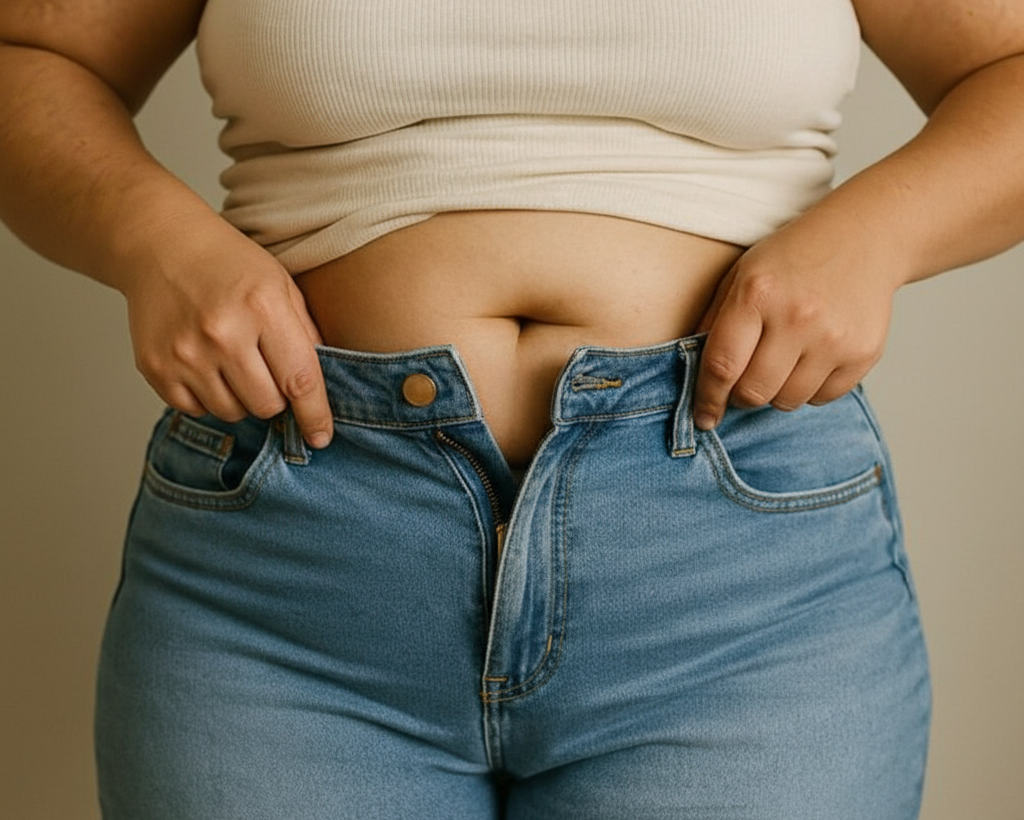
Customers don’t know what size to buy.
Sizing uncertainty doesn’t only increase returns. It destroys conversion rates, customer trust, and lifetime value.
The good news?
This problem can be fixed.
Here are 7 strategies that can dramatically reduce returns while increasing conversion and customer loyalty in less than 30 days.
1. Start Collecting Your Customers’ Body Measurements
You cannot design clothing for everybody.
One of the biggest mistakes fashion brands make is assuming that their customer body profiles perfectly match their size chart.
In reality, they often don’t.
When I had my own fashion brand, we started collecting customer body measurements to understand why returns were happening.
The results were surprising.
We discovered that our size chart did not fully represent the body measurements of our actual customers. We had to redesign our sizing system.
The same thing happens with many brands we work with today.
Every time we onboard a new fashion brand, we frequently discover gaps between their target customer and their existing size chart.
If you don’t know the body measurements of your customers, you’re essentially designing blindly.
Ways to collect this data:
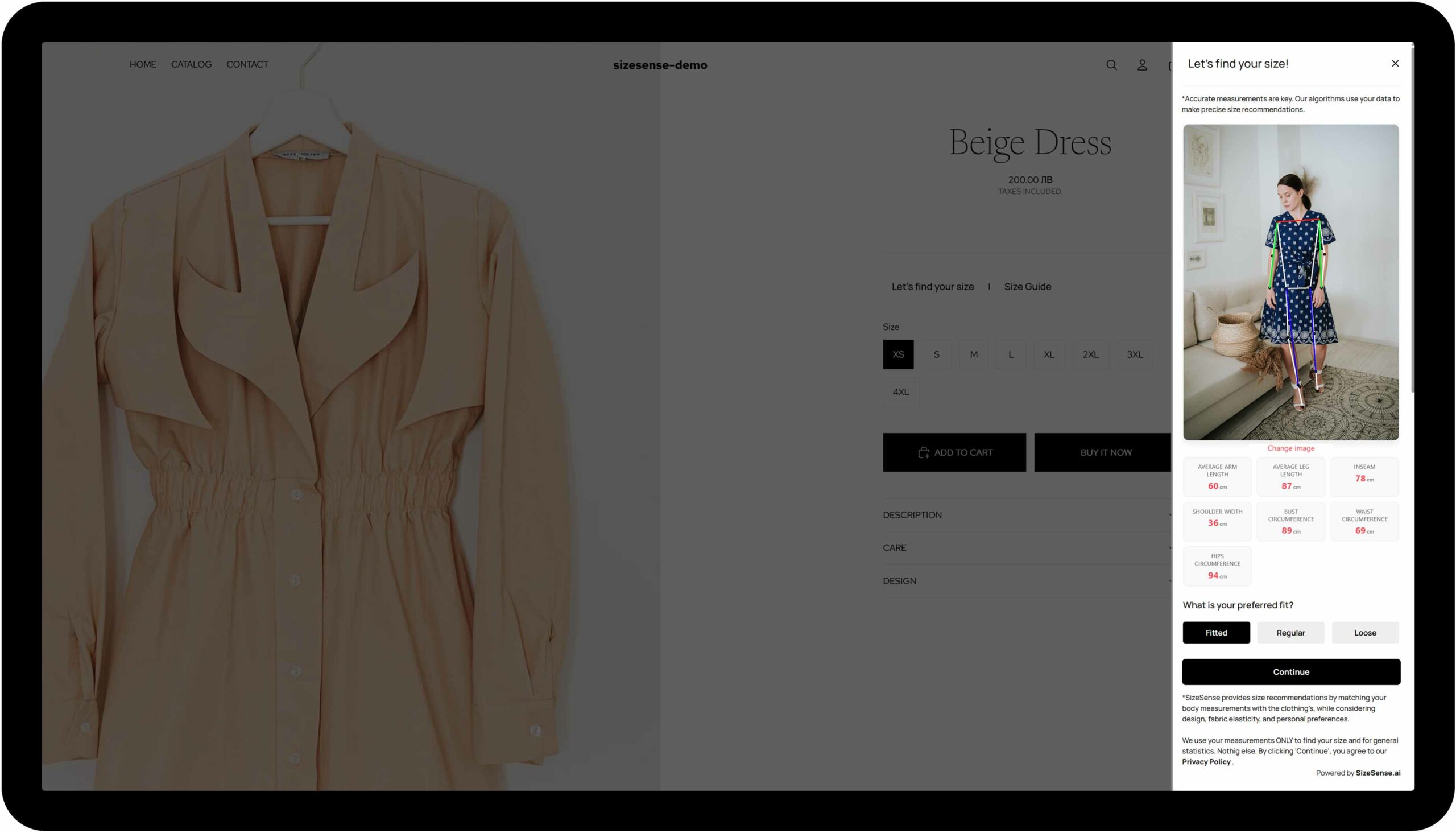
- Through your size recommendation tool
- Post-purchase surveys
- Fit questionnaires
- Customer support interactions
- Loyalty programs
The brands that understand their customers’ bodies win.
2. Stop Using Only a Generic Size Chart
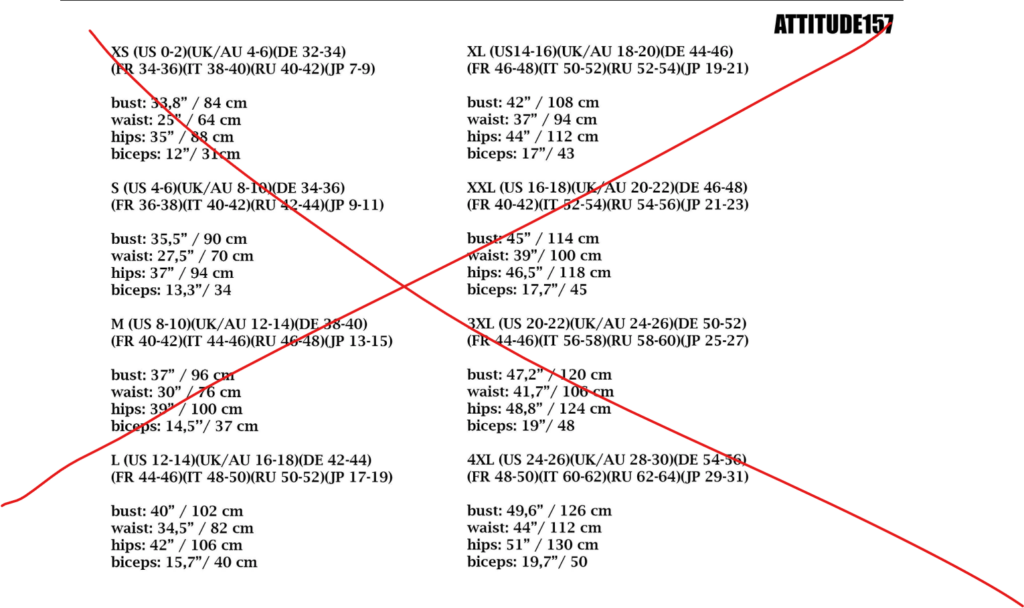
Most brands upload one general size chart and assume that it solves the sizing problem.
Unfortunately, it often creates even more confusion.
Why?
Because body shape matters.
Most size charts assume that customers have an hourglass body shape.
However, only around 8-10% of women actually have this body type.
The majority have pear, rectangle, apple, or inverted triangle body shapes.
This means that a customer may fall into:
- Medium in bust
- Large in waist
- Small in hips
So which size should she buy?
Without product-specific measurements (size chart showing product measurements), she has no idea.
This uncertainty is one of the main reasons customers order multiple sizes or abandon their cart entirely.
Every product should have:
- Garment measurements
- Product-specific size charts
- Information about fit and silhouette
- Stretch information
The more specific you are, the easier it becomes for customers to buy confidently.
3. Sizing Is Not a Size Problem. It’s a Trust Problem.
There is a hidden two-part system in the human brain that influences every purchase decision.
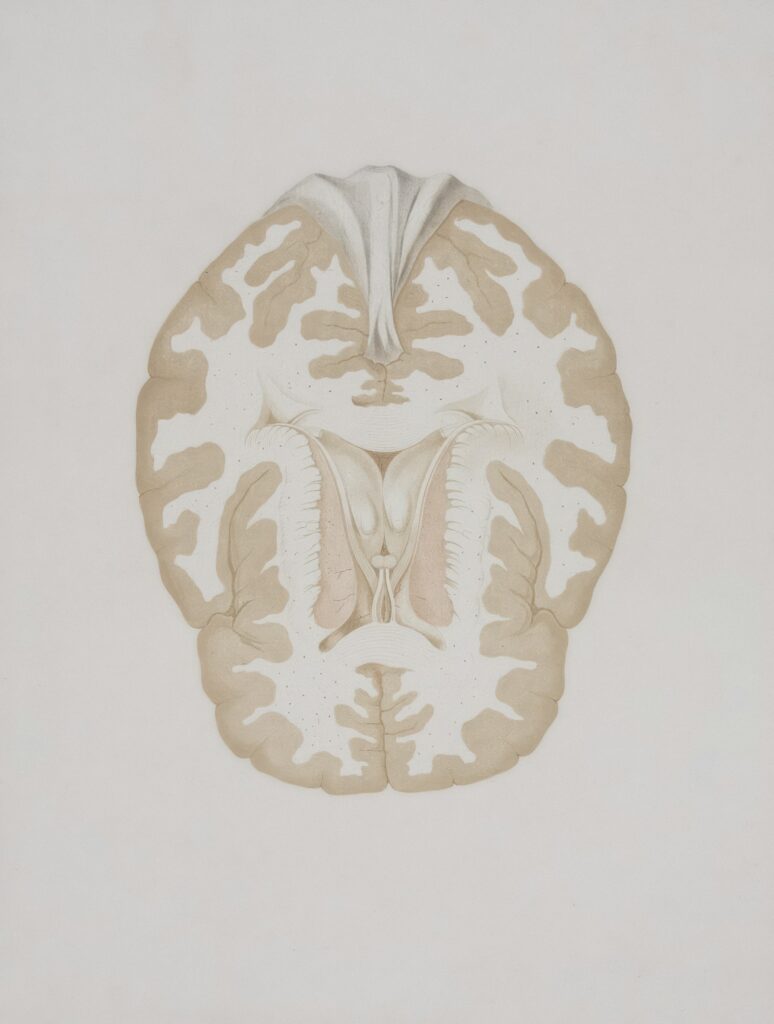
The subconscious mind
This is where purchases begin.
It is emotional and fast.
This part says:
- “I love this dress.”
- “I can imagine myself wearing this.”
- “This brand feels right.”
But then the conscious mind takes over.
The conscious mind
This part is analytical.
It starts asking questions:
- Will this fit me?
- What if it is too tight?
- What if I need to return it?
- Am I wasting my money?
This is where many fashion brands lose customers.
Because once customers start thinking, they start doubting.
And doubt creates friction.
Friction kills conversions.
Instead of imagining themselves wearing your product, they start calculating risks.
And once uncertainty appears, one of three things happens:
- They leave without purchasing.
- They order multiple sizes.
- They buy with low confidence, making returns more likely.
The goal of sizing is not simply to recommend a size.
The goal is to remove uncertainty.
Because when customers think:
“This brand understands my body.”
they buy with confidence.
Fit is not simply a sizing problem.
It is a trust problem.
4. Fabric Elasticity Matters More Than Most Brands Think. Choose a size recommendation solution that accounts for body measurements, garment dimensions, and fabric stretch.
Many size recommendation tools completely ignore garment measurements and fabric elasticity.
This creates inaccurate recommendations.
This is particularly dangerous for:
- Jeans
- Pants
- Evening dresses
- Formal wear
- Tailored garments
Let’s take jeans as an example.
Imagine your waist measures 36 inches.
The jeans waistband measures only 34 inches.
Most people would assume they won’t fit.
But if the jeans contain elastane, they may easily stretch by much more than one inch. This depends on the fabric and its elasticity.
This smaller waistband is actually intentional.
It allows the jeans to stay secure and prevents them from becoming loose during wear.
Without considering elasticity, recommendations become inaccurate.
Accurate size recommendations must consider:
- Body measurements
- Garment measurements
- Fabric composition
- Elasticity
- Clothing design
- Fit preferences
Without these variables, recommendations are little more than guesses.
5. Make Your Size Recommendation Tool Impossible to Miss
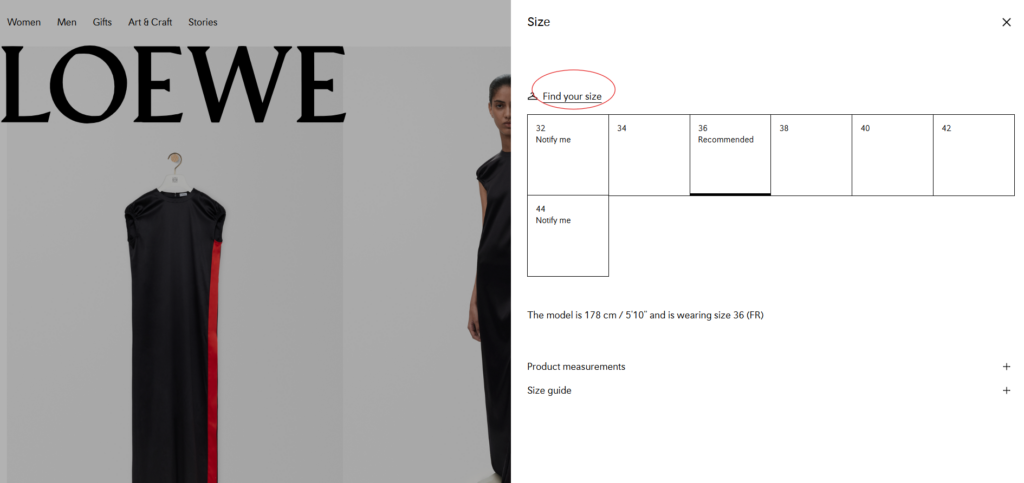
Many brands install a size recommendation tool and then hide it behind a test link.
Customers never see it.
Visibility matters.
Make your sizing assistance highly visible:
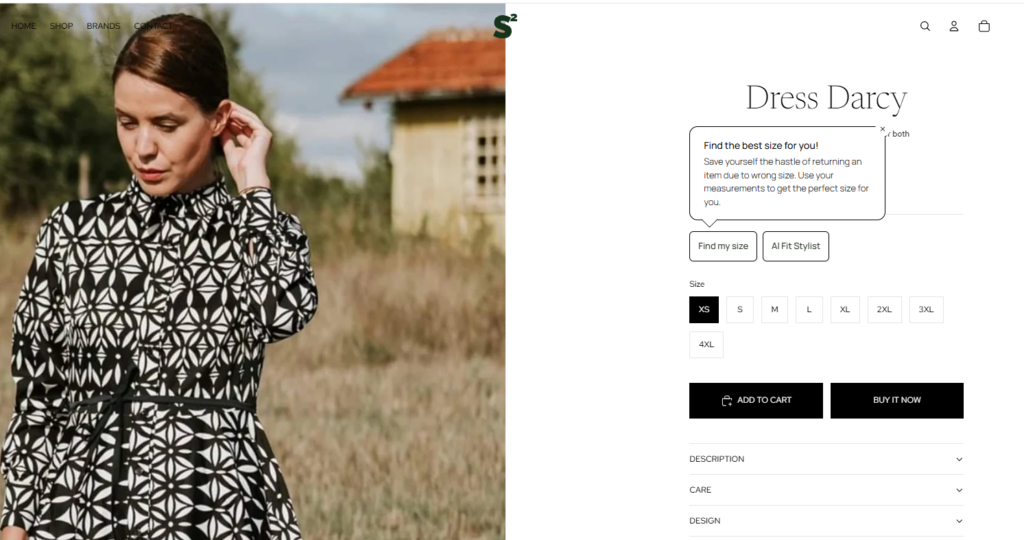
- Use popups and attention-grabbing widgets.
- Add trust messages near the size selector.
- Include reminders in cart and checkout.
- Mention sizing assistance in order confirmation emails.
When customers see that you genuinely care about helping them find the right size, trust increases dramatically.
With my previous fashion brand, our average order value increased by more than 24%.
Why?
Because customers finally felt confident ordering additional items.
They were no longer afraid of getting the wrong size.
Confidence increases basket size.
6. Use an Accurate Size Recommendation System
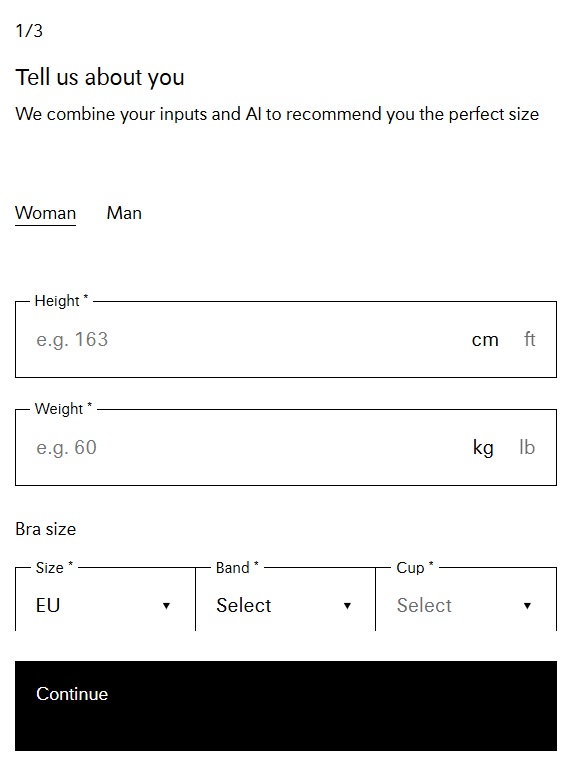
Many recommendation tools are built on assumptions rather than actual garment data.
Common approaches include:
Past Purchase Analysis
Assumes previous purchases predict future sizing needs.
But bodies change.
Different fabrics behave differently.
Different fits require different sizes.
Brand Size Matching
Assumes sizes are consistent across brands.
They are not.
A Medium in one brand may fit like an Extra Small in another.
Height and Weight-Based Recommendations
This method completely ignores:
- Body shape
- Fat distribution
- Proportions
- Fit preferences
Two women with identical height and weight can require completely different sizes.
This is why many recommendation tools often suggest:
“Any size should fit.”
That recommendation is not helpful.
Customers want confidence.
Sometimes the honest answer is:
- This product may be too tight.
- This dress may not fit your proportions.
- You may prefer another size.
Trust is built through honesty.
7. Work With Real Body Measurements
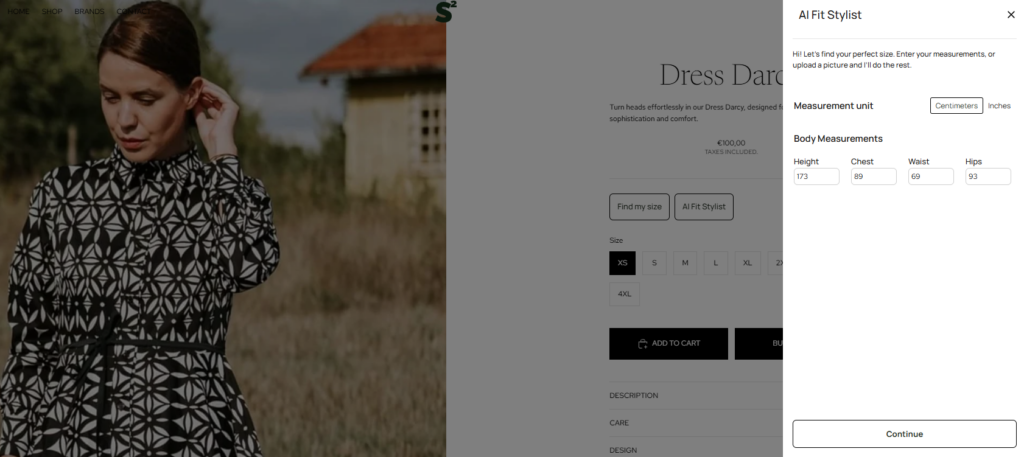
A few centimeters can completely change the recommended size.
This is especially true for:
- Jeans
- Pants
- Tailored garments
- Occasion wear
- Fitted dresses
Generic inputs like:
- Height
- Weight
- Age
simply aren’t enough.
Customers understand this.
In fact, millions of shoppers search online every year for:
- How to measure bust
- How to measure waist
- How to measure hips
- How to measure inseam
People want precision.
Because they know that precision creates confidence.
The more accurately you understand the customer’s body, the more accurately you can recommend the right size.
Stop Using Terms Like “True to Size”
Phrases such as:
- True to size
- Runs small
- Runs large
can be extremely misleading.
Especially for first-time customers.
What exactly does “true to size” mean?
True according to which body type?
Which market?
Which country?
Without product-specific measurements, these statements often create more confusion than clarity.
Instead, provide customers with:
- Garment measurements
- Stretch information
- Product-specific recommendations
- Automatic size recommendations
This gives shoppers something far more valuable than vague labels:
Confidence.
The Brands That Win in Fashion Will Win Through Fit
Returns are not simply a logistics problem.
They are a symptom of uncertainty.
Customers want to feel understood.
They want to feel that your brand understands their body and helps them make the right decision.
The brands that remove sizing uncertainty will:
✅ Increase conversion rates
✅ Reduce returns
✅ Increase average order value
✅ Improve customer loyalty
✅ Increase customer lifetime value
Because when customers trust your fit, they come back.
Again and again.
Want to See How Leading Fashion Brands Are Solving This?
Book a demo and discover how accurate, garment-based size recommendations can help your brand increase conversions, reduce returns, and create loyal customers.